Roots and Returns: Why Savvy Investors Are Choosing Historic Greenwood Over Suburban Sprawl
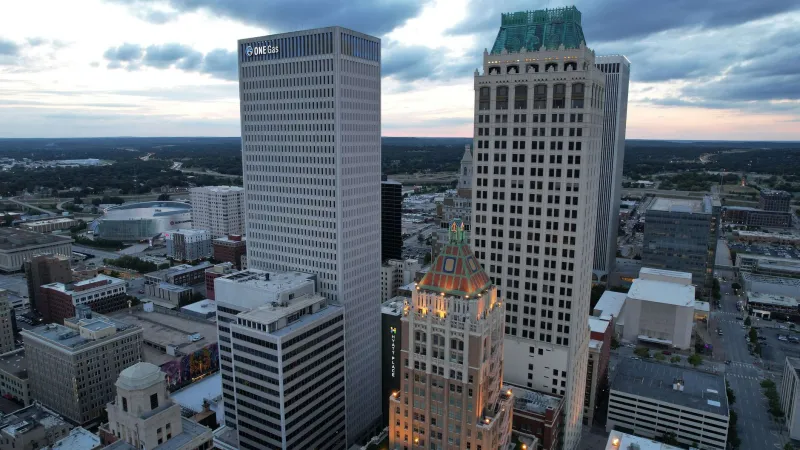
The Quiet Shift in Where Smart Money Is Going
For decades, conventional wisdom held that suburban development represented the safest, most predictable path for real estate investment. Clean lots, new infrastructure, and growing bedroom communities seemed to promise steady returns with minimal uncertainty. Yet a measurable and accelerating shift is underway. Across the United States, institutional investors, community development financial institutions, and individual property owners are redirecting capital toward historic urban districts — and Greenwood, in the heart of Tulsa, Oklahoma, is emerging as one of the most instructive examples of why.
The case for Greenwood is not built on sentiment alone. It is grounded in verifiable financial data, documented tax advantages, and the kind of demographic momentum that drives sustained property appreciation over time. For those willing to look carefully at the evidence, the comparison between historic district investment and conventional suburban development is striking.
Understanding the Appreciation Differential
Property value trends in established historic districts consistently outpace those of newly developed suburban corridors over comparable timeframes. Research from the National Trust for Historic Preservation has documented that properties within designated historic districts appreciate at rates between 5 and 20 percent higher than equivalent properties in non-designated areas over ten-year periods. The underlying mechanics are not difficult to understand.
Suburban development operates on a model of initial scarcity followed by rapid supply expansion. As developers build outward, new inventory continuously enters the market, moderating price growth and often depressing values in earlier phases of the same development corridor. Historic districts, by contrast, operate under permanent supply constraints. The building stock cannot be meaningfully replicated, zoning and preservation guidelines limit overdevelopment, and the character that attracts buyers and tenants in the first place is structurally protected.
In Greenwood specifically, the combination of a nationally recognized historical identity — rooted in the legacy of what was once called Black Wall Street — and a concentrated revitalization effort has produced a real estate environment where demand continues to outpace available inventory. Properties that traded at modest valuations a decade ago have seen substantial appreciation as the district's profile has grown, both nationally and internationally.
Tax Incentives That Fundamentally Alter the Investment Calculus
Beyond raw appreciation, the tax environment surrounding historic district investment represents a significant and frequently underappreciated financial advantage. Federal Historic Tax Credits, administered through the National Park Service in partnership with the Internal Revenue Service, allow investors in certified historic rehabilitation projects to claim a credit equal to 20 percent of qualified rehabilitation expenditures against their federal tax liability. This is not a deduction — it is a direct offset against taxes owed, a distinction with material consequences for project-level returns.
Oklahoma compounds this advantage through its own state-level Historic Rehabilitation Tax Credit program, which has provided additional incentives for qualifying projects within the state. When federal and state credits are stacked against a well-structured rehabilitation project, the effective cost of bringing a historic property to market is substantially lower than the headline acquisition and renovation figures suggest.
Suburban development receives no equivalent benefit structure. New construction may qualify for certain energy efficiency incentives or opportunity zone advantages in select geographies, but the layered historic tax credit framework available in Greenwood represents a structural financial advantage that experienced developers have learned to incorporate into their underwriting from the earliest stages of project analysis.
Community Stability as a Financial Variable
Conventional real estate analysis tends to focus on hard financial metrics while treating community characteristics as qualitative background. Increasingly, however, institutional investors are recognizing that community stability — the degree to which a neighborhood maintains its population, its social networks, and its civic infrastructure — is itself a quantifiable driver of long-term value.
Historic districts with deep community roots exhibit lower vacancy rates, stronger tenant retention, and greater resistance to the cyclical downturns that periodically devastate suburban markets dependent on commuter populations and big-box retail anchors. Greenwood's business community, supported by the Historic Greenwood Chamber and a network of community development organizations, has cultivated exactly this kind of structural stability.
The district's identity is not manufactured. It emerged from more than a century of community history, including survival through one of the most devastating episodes of racial violence in American history. That depth of roots creates a kind of investment environment that cannot be replicated in a master-planned suburban development, regardless of the amenities offered. Tenants and property owners who locate in Greenwood are not simply renting square footage — they are affiliating with a community narrative that carries genuine market value.
What Developers Already Operating in Greenwood Report
Developers who have committed capital to Greenwood over the past several years consistently cite factors that do not appear in standard suburban investment analyses. The concentration of mission-aligned businesses creates a tenant ecosystem where individual operators benefit from the collective identity of the district, reducing the marketing burden on any single property owner. Foot traffic driven by heritage tourism, cultural programming, and community events generates commercial activity that suburban strip centers cannot replicate without enormous anchor tenant subsidies.
Several developers have noted that the due diligence process for Greenwood projects, while requiring careful navigation of preservation guidelines and community engagement expectations, ultimately produces better-defined projects with stronger long-term positioning. The constraints that some initially view as complications tend, upon reflection, to function as quality controls that protect the investment environment for everyone operating in the district.
Demographic Momentum and the Long-Term Outlook
The demographic trajectory of urban historic districts like Greenwood aligns favorably with the preferences of the two largest generational cohorts currently entering their peak earning and spending years. Both millennials and Generation Z demonstrate measurably stronger preferences for walkable, culturally rich urban environments over car-dependent suburban alternatives. This is not a passing trend — it reflects a structural shift in how a large segment of the American population defines quality of life and makes location decisions for both residence and business.
Tulsa's broader investment in urban infrastructure, coupled with Greenwood's specific cultural and historical profile, positions the district to capture an outsized share of this demographic demand over the coming decade. For investors with a sufficiently long time horizon, the compounding effect of demographic tailwinds on a supply-constrained historic district represents a fundamentally different risk-return profile than suburban development, which faces the headwinds of changing preferences and an aging infrastructure base.
The Case for Rethinking Where Capital Belongs
The Historic Greenwood Chamber does not suggest that every investment dollar should flow into the district, nor that suburban development lacks merit in every context. What the evidence does suggest, with increasing clarity, is that the assumption of suburban development as the default choice for stable, predictable real estate returns deserves serious scrutiny.
Greenwood offers a combination of tax advantages, appreciation potential, community stability, and demographic alignment that compares favorably with conventional alternatives on nearly every dimension that matters to a disciplined investor. For those willing to look past the familiar patterns of suburban expansion and engage with what a historic district actually offers, the financial logic is difficult to dismiss.
Rooted in legacy and building toward tomorrow, Greenwood represents not merely a place to invest — but a reason to invest with confidence.