Why Forward-Thinking Companies Are Choosing Culture Over Corporate Parks
The Office Address as a Recruiting Tool
For decades, corporate real estate decisions were governed by a familiar checklist: proximity to highways, square footage per dollar, parking ratios, and proximity to peer companies. The address itself was largely incidental — a logistical coordinate rather than a statement of values.
That calculus is changing, and changing fast.
A growing cohort of employers — ranging from regional professional services firms to nationally recognized brands — is discovering that where a company chooses to plant its flag communicates something profound to prospective employees. In an era when talented professionals have more leverage over their working conditions than at any previous point in modern history, the cultural texture of a workplace's surroundings has become a genuine factor in hiring and retention decisions.
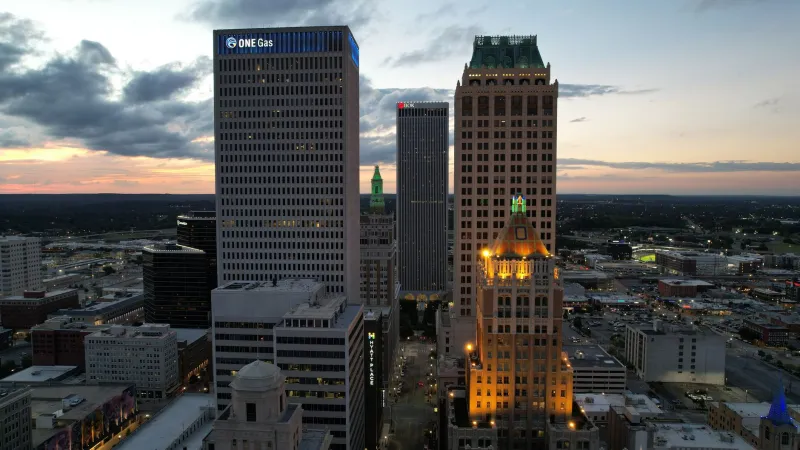
Historic Greenwood, the storied north Tulsa neighborhood that once anchored one of the most prosperous Black business communities in American history, is emerging as one of the more compelling examples of this phenomenon. Companies that have chosen to locate operations in and around the district report something they did not fully anticipate when they signed their leases: their employees are proud of where they work — not just what they do.
What Talent Actually Wants
The research on workforce priorities has grown increasingly consistent over the past several years. While compensation and benefits remain foundational, a meaningful segment of the professional workforce — particularly those in the 25-to-40 demographic range — places significant weight on factors that might once have been considered secondary. These include a sense of purpose in their work, alignment between their employer's stated values and its observable behavior, and a feeling of genuine connection to the communities in which they operate.
Sterile office parks on the suburban periphery of a city, however efficiently designed, struggle to deliver on these dimensions. They offer convenience, but rarely meaning. They provide space, but seldom story.
Historic districts like Greenwood offer something fundamentally different. Walking to lunch through streets that carry a century of commercial and cultural history is not the same experience as navigating a landscaped corporate campus. The difference is not merely aesthetic — it is psychological. Employees who work in places with deep roots tend to describe a stronger sense of grounding in their professional lives.
Several business owners and organizational leaders affiliated with the Historic Greenwood Chamber have noted this dynamic in their own operations. One financial services firm that relocated a portion of its operations to the district reported that the move became an unexpected asset during recruiting conversations. Candidates who might otherwise have viewed Tulsa as a secondary market began asking thoughtful questions about Greenwood's history and the company's relationship to the community — a level of engagement that, according to the firm's leadership, had not been typical in earlier recruiting cycles.
Heritage as a Retention Strategy
Beyond initial recruitment, the community character of Greenwood appears to influence how long employees choose to stay. Retention is among the most expensive challenges facing modern organizations, and the factors that drive it are often underestimated during the hiring process.
Employees who feel embedded in a community — who know the business owners on their block, who understand the history of the streets they walk, who sense that their employer's presence contributes something meaningful to a neighborhood — tend to develop a form of loyalty that transcends the transactional. They are not simply working at a company. They are participating in something larger.
Greenwood's narrative carries particular weight in this regard. The district's history — the extraordinary prosperity of Black Wall Street, the devastation of the 1921 Tulsa Race Massacre, and the ongoing work of reconstruction and renewal — is not a passive backdrop. It is an active, living story that employees engage with, learn from, and, in many cases, feel called to be part of. Companies that are intentional about connecting their teams to this history often find that it deepens employee investment in ways that conventional culture-building initiatives rarely achieve.
Corporate Real Estate Strategy Is Being Rewritten
The implications for how organizations approach facility decisions are significant. Real estate advisors who work with companies considering Tulsa locations report that conversations about Greenwood have become more frequent and more substantive over the past several years. The district is no longer simply a consideration for businesses with an explicit community development mandate — it is increasingly on the radar of companies whose primary motivation is straightforward business performance.
This shift reflects a broader recognition that the traditional variables used to evaluate commercial real estate — cost per square foot, transit access, proximity to amenities — do not capture the full value equation. The intangible qualities of a location, including its cultural vitality, its sense of identity, and the degree to which it fosters connection among the people who spend time there, are beginning to appear in the calculus.
For Greenwood, this represents both an opportunity and a responsibility. The district's history is not a marketing asset to be deployed casually. It is a trust held on behalf of the families and community members whose sacrifices and resilience created the legacy that now draws outside interest. The Historic Greenwood Chamber takes seriously the work of ensuring that commercial growth in the district reinforces, rather than displaces, the community that gives Greenwood its meaning.
Building a District That Works for Everyone
The most sustainable version of Greenwood's commercial renaissance is one in which the companies that choose to locate here become genuine participants in the community's ongoing story — not tenants who happen to occupy a historically significant address, but partners who invest in the district's continued vitality.
That means hiring locally, supporting Black-owned businesses in the neighborhood, engaging with the cultural and civic institutions that anchor community life, and approaching their presence in Greenwood with the same intentionality that drew them here in the first place.
When companies do this well, the results compound. Employees who see their employer actively contributing to a community they admire become ambassadors — both internally and externally. The workplace becomes a source of pride that extends beyond the work itself. And the district benefits from a class of business occupants who have genuine skin in the game.
Greenwood has always been a place where commerce and community were understood to be inseparable. The businesses that built Black Wall Street did not treat the neighborhood as a backdrop for their operations — they were the neighborhood. The most promising corporate arrivals today are those who understand and honor that tradition.
The Greenwood Advantage, Defined
For organizations evaluating where to grow, expand, or relocate operations, Greenwood presents a proposition that is difficult to replicate elsewhere: a location with authentic historical significance, an active and engaged business community, a city that has invested meaningfully in the district's infrastructure and visibility, and a story that employees can genuinely connect with.
In a labor market where differentiation matters more than ever, that combination is not a soft benefit. It is a strategic asset — one that compounds over time as a company's roots in the district deepen and its relationship with the community grows.
The Historic Greenwood Chamber welcomes inquiries from organizations interested in understanding what a presence in the district could mean for their business. Rooted in legacy, Greenwood is building tomorrow — and there is room at the table for companies ready to be part of that work.