Old Walls, New Margins: The Financial Case for Operating Inside Greenwood's Historic Buildings
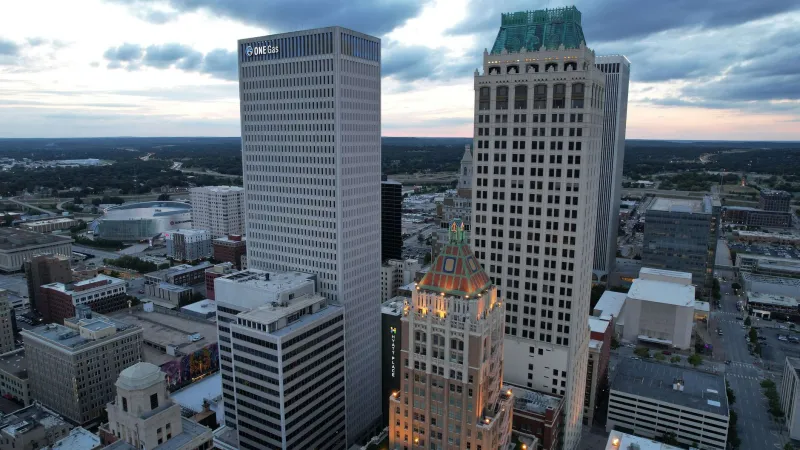
There is a persistent assumption in American business culture that newer is always better—that a freshly constructed office park or a just-delivered retail shell represents the most efficient environment for running a company. In Historic Greenwood, a growing number of entrepreneurs are quietly dismantling that assumption, one quarterly financial statement at a time.
The district's preserved commercial buildings, many of which trace their foundations to the early twentieth century, are delivering measurable financial benefits to the businesses operating within them. These advantages are not incidental. They are structural, repeatable, and—for those who understand how to access them—substantial.
The Rent Gap That New Construction Cannot Close
Begin with the most immediate variable: occupancy cost. Across Tulsa's newer commercial corridors, asking rents for ground-floor retail and professional office space have continued to climb, driven by elevated construction costs, financing rates, and developer margin expectations. In Historic Greenwood, the calculus is different.
Because many of the district's buildings were acquired and rehabilitated years or even decades before the current construction cost environment, their owners carry lower underlying debt loads. That reality is often passed along in the form of more competitive lease rates. For a small business operator, the difference between paying market-rate rent in a new development and occupying a comparable footprint in a well-maintained historic structure can represent tens of thousands of dollars annually—capital that stays in the business rather than flowing to a landlord.
Marcellus Tanner, who operates a financial consulting practice on North Greenwood Avenue, put the comparison plainly: "When I ran the numbers against two other spaces I was considering, the Greenwood location was meaningfully less expensive per square foot. That margin funds an additional staff position for me. It is not a small thing."
Federal and State Incentives: A Layer of Support That New Buildings Cannot Access
Perhaps the most underutilized financial advantage associated with historic commercial space is the constellation of tax incentives available to businesses and property owners engaged in qualified rehabilitation work. The Federal Historic Tax Credit, administered through the National Park Service and the Internal Revenue Service, provides a credit equal to twenty percent of qualified rehabilitation expenditures for certified historic structures. Oklahoma's own historic tax credit program layers additional benefits on top of that federal baseline.
For a business owner who is also the property owner—or who negotiates a lease structure that allows participation in improvement-related incentives—these credits can substantially reduce the effective cost of buildout. A tenant investing in qualified interior improvements within a certified historic structure may find that the federal and state programs together offset a meaningful portion of those costs.
Beyond tax credits, the district and its stakeholders have access to grant programs administered through community development financial institutions, the Oklahoma Historical Society, and various preservation-focused foundations. The Historic Greenwood Chamber actively works to connect member businesses with these resources, ensuring that the financial tools available to the district are understood and deployed effectively.
Energy Efficiency: Rewriting the Narrative on Old Buildings
The conventional wisdom holds that older buildings are energy inefficient—drafty, poorly insulated, and expensive to heat and cool. That characterization, while perhaps accurate for neglected structures, does not describe what is happening in Greenwood's thoughtfully rehabilitated commercial spaces.
Modern weatherization techniques, high-performance window glazing, spray foam insulation applied within historic envelope constraints, and updated mechanical systems are transforming the operating economics of the district's buildings. Critically, the thermal mass inherent in thick masonry walls—a defining feature of early twentieth-century commercial construction—provides a natural buffering effect against temperature extremes that lightweight modern construction simply cannot replicate.
Several Greenwood business owners report utility costs that compare favorably with, and in some cases outperform, those of colleagues operating in newer buildings. "People assume my space is expensive to condition," said Renata Holloway, who runs a design studio in a rehabilitated brick building near Archer Street. "My actual electric bills have surprised even me. The walls do a lot of work."
The combination of passive thermal performance and active efficiency upgrades is producing buildings that are not just charming—they are operationally lean.
Character as a Commercial Asset
The financial argument for Greenwood's historic buildings does not stop at operating costs. There is a growing body of evidence, supported by consumer research and the lived experience of business owners in heritage districts across the country, that the physical environment of a business influences customer behavior in measurable ways.
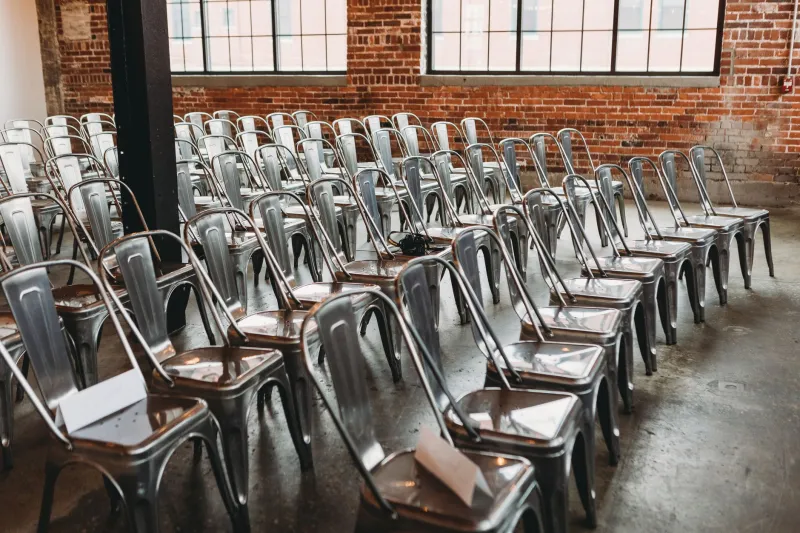
Exposed brick, original hardwood flooring, high ceilings with period detail, and the unmistakable sense of permanence that comes from a building that has stood for generations—these features generate what marketers increasingly call "ambient authenticity." Customers linger longer, spend more per visit, and return with greater frequency in environments that feel genuinely rooted rather than manufactured.
For Greenwood businesses, this translates into a form of passive marketing that no advertising budget can fully replicate. The building itself communicates trustworthiness, permanence, and connection to something larger than a single commercial transaction.
"My clients tell me they feel different walking into this space," said Tanner. "There is a gravity to it. That affects how they perceive the work we do together."
Reduced Buildout Risk Through Existing Infrastructure
New commercial construction carries inherent uncertainty. Timelines extend, costs escalate, and businesses waiting for a new space to reach occupancy readiness absorb real revenue losses during the delay. Greenwood's existing historic buildings, particularly those that have already undergone a rehabilitation cycle, often offer a faster path to operational status.
Existing plumbing, electrical infrastructure, and HVAC rough-ins—updated to code during prior renovation phases—mean that a new tenant's buildout scope is frequently narrower than it would be in a raw new shell. The result is lower upfront capital requirements and a faster return to revenue-generating activity.
A Smart Choice, Grounded in Legacy
The story of Historic Greenwood has always been one of resilience—of a community that rebuilt after devastation and continued building through every subsequent challenge. Today, that legacy is expressed not only in cultural significance but in the practical financial architecture of the district's commercial landscape.
For business owners evaluating where to locate or expand, the question is no longer whether a historic building can compete with new construction on financial terms. The evidence from Greenwood's operating businesses suggests it frequently can—and in several dimensions, it wins outright.
The Historic Greenwood Chamber invites prospective business owners to explore the district's available commercial spaces and to connect with our team for guidance on incentive programs, lease structures, and the full range of resources available to businesses choosing to root themselves in this community. The walls here carry history. They also carry margin.