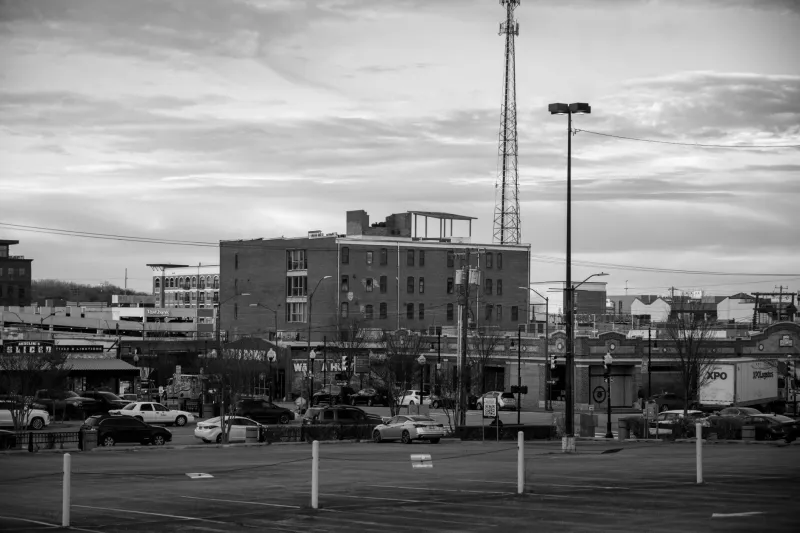
Where Creativity Finds Its Ground: How Greenwood Is Quietly Becoming a Creative Economy Powerhouse
A Different Kind of Creative Hub
For decades, the conventional wisdom held that creative professionals had to choose between two extremes: the expensive, oversaturated arts districts of major metropolitan centers or the cultural isolation of smaller markets. New York, Los Angeles, and Chicago absorbed generation after generation of artists, designers, and makers—often at enormous personal financial cost. The tradeoff was understood, if not always accepted willingly.
Greenwood, the historic district in Tulsa, Oklahoma, is beginning to disrupt that calculus in meaningful ways.
Across the country, a growing number of artists, graphic designers, muralists, textile workers, furniture makers, and independent creative studio operators are choosing Greenwood not as a compromise, but as a deliberate destination. What draws them is not merely affordability—though that factor is significant—but something less easily quantified: the sense that this place carries a story worth being part of.
The Economics of Creative Relocation
The numbers behind this trend are worth examining carefully. Studio and commercial lease rates in Greenwood remain substantially lower than comparable spaces in recognized creative districts in Nashville, Austin, or Denver—cities that have themselves become prohibitively expensive for early-career and mid-career creatives over the past decade. For a working artist or small design studio, the difference between a $600-per-month workspace and a $2,200-per-month workspace is not merely a budget line. It is the difference between financial sustainability and chronic precarity.
Markesha Williams, a textile designer and surface pattern artist who relocated from Atlanta to Greenwood three years ago, describes the transition in practical terms. "In Atlanta, I was spending so much of my income on overhead that I couldn't invest in materials, in equipment, in growth," she explains. "When I moved here, the first thing I noticed was that I could breathe again financially. The second thing I noticed was that this community actually wanted me here—not just as a tenant, but as a neighbor."
That distinction—between being a tenant and being a neighbor—surfaces repeatedly in conversations with creative professionals who have chosen Greenwood as their base of operations.
Cultural Infrastructure as Creative Capital
Affordability alone does not explain the Greenwood effect. Plenty of low-cost markets across the country fail to attract sustained creative sector growth, often because they lack the cultural infrastructure that sustains creative work over time. Art is not produced in a vacuum. It emerges from community, from conversation, from friction and collaboration and shared reference points.
Greenwood offers something that purpose-built creative districts frequently cannot manufacture: an authentic and layered cultural narrative. The district's history—its founding as a prosperous African American commercial center, its destruction in the 1921 Tulsa Race Massacre, and its enduring legacy of resilience and reconstruction—provides a context that resonates deeply with artists and designers who are drawn to work that carries meaning beyond aesthetics.
Darius Okafor, a graphic designer and brand identity specialist who moved his studio to Greenwood from Kansas City two years ago, speaks directly to this dimension. "I was looking for a place where my work could exist in conversation with something larger than itself," he says. "Greenwood has that. The history here isn't just background—it's alive. It shapes the conversations I have with clients, the projects I take on, the way I think about what design is actually for."
This quality—what urban planners sometimes call "narrative density"—is increasingly recognized as a genuine economic asset. Districts that carry compelling, authentic stories attract not only residents but visitors, clients, collaborators, and investors who are drawn to the energy that genuine cultural depth generates.
The Adjacent Economy: How Creative Growth Catalyzes Broader Opportunity
The economic impact of a growing creative sector extends well beyond the artists and studios themselves. Research consistently demonstrates that concentrations of creative professionals generate significant downstream economic activity, stimulating demand for specialty food and beverage establishments, retail, event venues, professional services, and hospitality infrastructure.
In Greenwood, this pattern is already visible. The influx of working artists and designers has contributed to increased foot traffic in the district, supporting restaurants, coffee shops, and retail businesses that serve a population with distinctive spending patterns. Creative professionals tend to patronize locally owned establishments at higher rates than the general population, reinforcing the district's commitment to independent business development.
Furthermore, the presence of active creative studios attracts a secondary wave of economic activity: photography clients, corporate branding contracts, commissioned public art projects, and design partnerships with businesses throughout the Tulsa metropolitan area. Greenwood's creative community is not insular—it generates economic relationships that extend far beyond the district's boundaries while anchoring its economic identity firmly in place.
Lauren Tate, a muralist and installation artist who has maintained a studio in Greenwood for four years, describes the professional network that has developed organically around the district's creative community. "I've collaborated with businesses I never would have connected with otherwise," she says. "There's a sense here that we're building something together—that my success and the success of the restaurant down the street and the boutique around the corner are actually connected. That's not something I experienced in the bigger markets."
Historic Structures as Creative Infrastructure
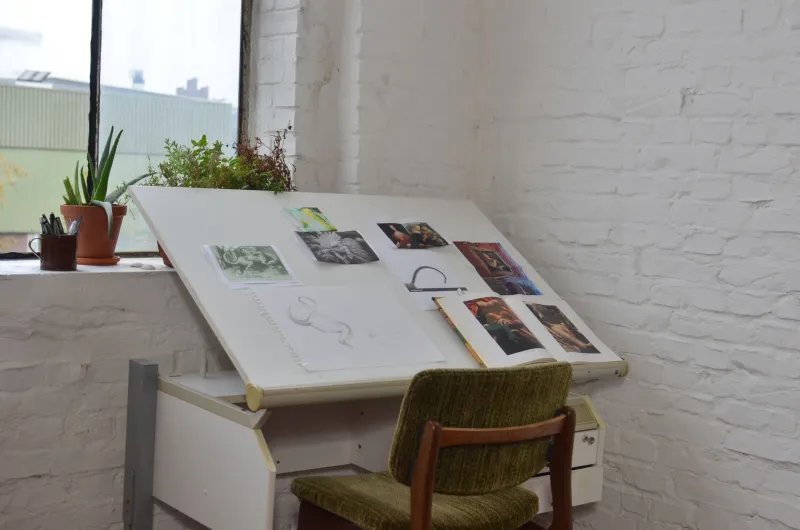
The physical fabric of Greenwood itself plays a role in this story that should not be underestimated. The district's historic commercial buildings—with their high ceilings, brick construction, large window openings, and generous floor plates—are structurally well-suited to the needs of working artists and makers. These are not spaces that require expensive renovation to become functional studios; they are spaces that accommodate creative work with minimal modification.
This alignment between historic building stock and creative sector needs is not unique to Greenwood, but it is particularly pronounced here. The district's architecture reflects an era of commercial construction that prioritized natural light, spatial flexibility, and material durability—qualities that translate directly into desirable studio and workshop environments.
The Historic Greenwood Chamber has been attentive to this alignment, working to support adaptive reuse initiatives that preserve the district's architectural character while accommodating the practical requirements of contemporary creative businesses. Preserving these structures is not merely a matter of historical sentiment—it is an economic strategy that sustains the physical conditions enabling creative sector growth.
Building a Creative Community With Deep Roots
What distinguishes Greenwood's emerging creative economy from the transient creative clusters that have appeared and dissolved in other cities is the degree to which it is grounded in genuine community investment. The artists and designers who are choosing Greenwood are not, by and large, seeking a temporary foothold before moving on to larger markets. They are making long-term commitments—signing multi-year leases, purchasing properties, enrolling their children in local schools, and participating in the civic life of the district.
This rootedness matters enormously for the long-term health of both the creative sector and the broader community. Creative districts that attract committed residents rather than transient occupants develop the social capital and institutional knowledge that sustain economic vitality across generations.
Greenwood has always understood the value of building for permanence. Its original commercial district was constructed by entrepreneurs who intended their work to endure—and who understood that economic strength and community identity are inseparable. The creative professionals now choosing Greenwood as their home appear to share that understanding. In doing so, they are adding a new chapter to a legacy that has never stopped being written.