Where History Meets Hustle: Why Remote Professionals Are Planting Roots in Greenwood

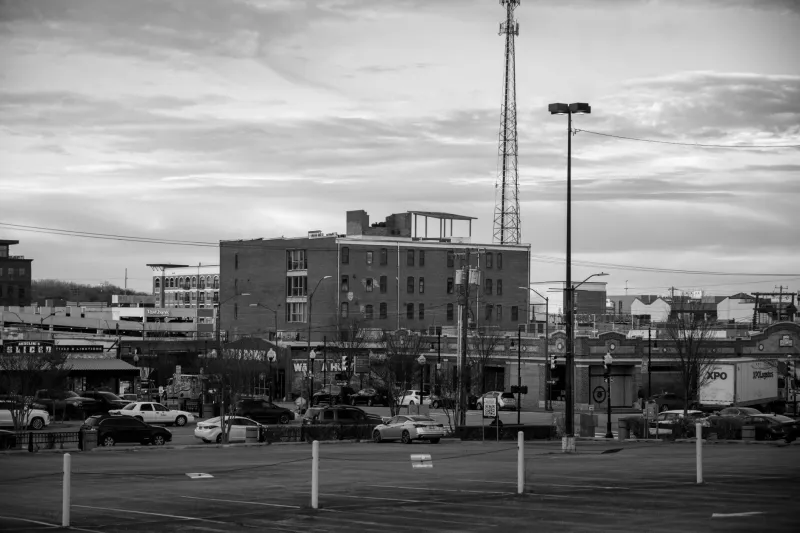
Photo by Photo by Swello on Unsplash on Unsplash
For much of the twentieth century, professional ambition was measured in commute times and corner offices. Workers relocated to cities not for culture or community, but for proximity to employers. That calculus has changed dramatically. The post-pandemic workforce operates by an entirely different set of coordinates — ones that place meaning, environment, and authenticity at the center of the professional equation.
Historic Greenwood, the storied district in Tulsa, Oklahoma, is discovering that its greatest economic assets may not be its tax incentives or its infrastructure investments, but something far more difficult to manufacture: a genuine sense of place.
The Shift That Changed Everything
When remote work became a widespread reality, millions of professionals suddenly found themselves untethered from the geography of their employers. The immediate response for many was predictable — a retreat to lower cost-of-living cities or quieter suburban communities. But as months turned into years, a more nuanced preference emerged.
Workers were not simply seeking affordability. They were seeking belonging. They wanted neighborhoods that felt alive outside of business hours, communities where commerce and culture existed in conversation with each other, and districts where the built environment told a story larger than quarterly earnings.
Historic districts, long regarded primarily as preservation projects or tourism assets, began to register on a different kind of map — one drawn by digital nomads, freelance creatives, and remote employees evaluating where to anchor their professional lives.
Greenwood, with its layered history and deliberate commitment to community-centered development, has become one of the more compelling entries on that map.
Affordability Without Sacrifice
One of the persistent tensions for mobile professionals choosing between legacy business districts and emerging neighborhoods is the trade-off between cost and quality. In many major metros, affordable workspace comes at the expense of environment. Basement-level co-working suites and repurposed strip mall offices may offer competitive square footage rates, but they rarely inspire the kind of focused, creative output that knowledge workers require.
Greenwood presents a different proposition. Commercial spaces within the district offer pricing structures that remain accessible to independent contractors, small creative firms, and early-stage startups — yet they exist within a physical and cultural context that is anything but ordinary. Restored storefronts, walkable streetscapes, and proximity to locally owned restaurants and gathering spaces create a daily work environment that feels purposeful rather than provisional.
For professionals accustomed to paying premium rates for character in cities like Austin, Nashville, or Denver, Greenwood's value equation is striking. The district delivers the intangible qualities that make a workspace feel worth inhabiting, without the financial burden that has priced many workers out of similarly vibrant neighborhoods in larger markets.
Culture as Infrastructure
Urban planners and economic developers have long debated the role of cultural amenities in attracting and retaining talent. What Greenwood demonstrates is that culture, when it is organic rather than engineered, functions as a form of infrastructure — invisible in the traditional sense, but foundational to the experience of a place.
The district's identity is not the product of a branding exercise or a developer's vision board. It is the result of a community that has, across generations, insisted on maintaining its own narrative. That insistence is visible in the businesses that line Greenwood Avenue, in the programming hosted by local institutions, and in the conversations that happen between neighbors who understand they are part of something historically significant.
For remote professionals whose work is often solitary and screen-mediated, this ambient sense of collective purpose carries real weight. Choosing to work within a community that has a story — and that actively honors that story — provides a form of context that a generic suburban office park cannot offer.
Creative workers, in particular, consistently cite their surroundings as a source of inspiration. Greenwood's visual and historical richness provides exactly the kind of environmental stimulation that fuels original thinking.
Networks That Function Differently
Beyond the physical and cultural dimensions, Greenwood offers something that has become increasingly rare in the modern professional landscape: a community network built on genuine mutual investment rather than transactional networking.
The Historic Greenwood Chamber of Commerce has long served as a connective tissue for the district's business community, facilitating relationships between established enterprises and emerging ventures, between longtime residents and newly arrived professionals. For remote workers who lack the organic networking opportunities that come with a traditional office environment, access to this kind of community infrastructure is significant.
Professionals who relocate to or establish their work base within Greenwood are not simply renting square footage. They are entering a community ecosystem with its own rhythms, its own institutions, and its own standards for how commerce and community responsibility intersect. That ecosystem has a demonstrated capacity to support businesses through periods of difficulty — a quality that carries particular meaning for independent workers who do not have the safety net of a large employer behind them.
The Talent Magnet Effect
What happens when a neighborhood begins to attract a critical mass of independent professionals and remote workers? The effects tend to be mutually reinforcing. New arrivals bring spending power that supports local businesses. Their presence signals to other mobile professionals that the district is viable and welcoming. Employers seeking to recruit talent begin to recognize the area as a desirable address. And the community's reputation for creative, purpose-driven work begins to attract the kind of enterprises that further enrich the environment.
Greenwood is in the early stages of this dynamic. The district has not yet reached the saturation point that transforms vibrant neighborhoods into caricatures of themselves — a fate that has befallen more than a few celebrated creative districts across the country. The opportunity to participate in Greenwood's development at this stage, before the market fully prices in the district's value, is one that forward-thinking professionals and small businesses are beginning to recognize.
A Legacy That Attracts the Future
There is a certain irony in the fact that one of Greenwood's most powerful draws for future-oriented professionals is its past. The district's history — marked by remarkable entrepreneurial achievement, devastating loss, and determined reconstruction — is not simply a story to be commemorated. It is an active argument for the resilience and ingenuity that define community-centered commerce.
For remote professionals seeking more than a convenient address, that argument resonates. They are not looking for a workspace that is merely functional. They are looking for a place that stands for something. In Greenwood, the legacy is not a museum piece. It is a living framework for how business, culture, and community can reinforce one another across generations.
The Historic Greenwood Chamber remains committed to ensuring that the district's growth honors that legacy while creating genuine opportunity for those who choose to invest their professional lives here. The community's doors are open — to entrepreneurs, to remote workers, to creative professionals, and to anyone who understands that the most productive work often happens in the most meaningful places.