What the World Can Learn From Greenwood: A Community's Blueprint for Rising After Devastation
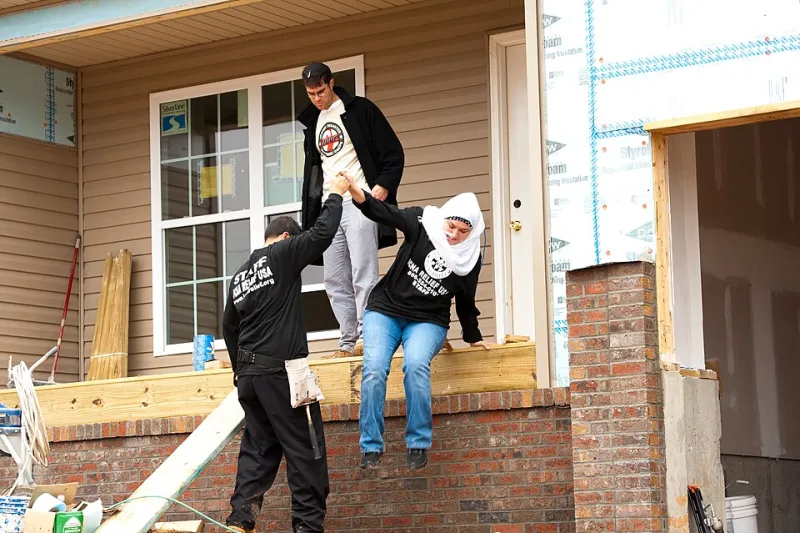
Photo: Department of Homeland Security. Federal Emergency Management Agency. Public Affairs Division. 3/1/2003, Public domain, via Wikimedia Commons
In the spring of 1921, one of the most prosperous Black communities in American history was reduced to rubble in less than 48 hours. The Greenwood District of Tulsa, Oklahoma — a thriving corridor of Black-owned businesses, professional offices, and cultural institutions that earned the name "Black Wall Street" — was destroyed by a coordinated act of racial violence. Hundreds of residents lost their lives. Thousands more lost their homes and livelihoods overnight.
What followed was not a quiet disappearance. It was a reconstruction.
Today, as communities across the United States grapple with the aftermath of economic downturns, natural disasters, pandemic-era displacement, and systemic disinvestment, Greenwood's recovery story has emerged as something far more valuable than a historical footnote. It is a living case study — one that the Historic Greenwood Chamber is committed to preserving, interpreting, and sharing with the broader national conversation about sustainable community rebuilding.
The Foundation of Recovery: Community Identity as Infrastructure
One of the most instructive elements of Greenwood's post-1921 recovery was the speed with which residents chose to rebuild in place. Within weeks of the massacre, residents were filing insurance claims, purchasing lumber, and laying foundations on the same lots where their businesses had stood. This was not simply an act of defiance. It was a strategic decision rooted in the understanding that community identity — the shared sense of belonging, trust, and mutual accountability — is itself a form of infrastructure.
For contemporary communities facing displacement, this principle carries significant weight. Economic recovery programs that relocate residents, even with good intentions, often sever the social networks that make rebuilding possible in the first place. The residents of Greenwood understood that the land was inseparable from the community. Staying was not stubbornness. It was strategy.
Modern planners and community development practitioners working in post-disaster contexts would do well to center this insight. Programs that prioritize keeping existing residents in place — through emergency rental assistance, expedited permitting for reconstruction, and anti-displacement zoning policies — are not merely compassionate. They are economically sound.
Grassroots Organizing as the Engine of Economic Renewal
Greenwood's recovery was not orchestrated by a government agency or a national nonprofit. It was driven by residents themselves, organized through churches, fraternal organizations, and informal neighborhood networks. These institutions served as both social anchors and economic coordination mechanisms — pooling resources, sharing labor, and distributing information in the absence of formal support structures.
This model of community-led recovery has direct applications for neighborhoods facing crisis today. When formal institutions are slow to respond or structurally unable to serve marginalized communities, grassroots organizing fills the gap. The historic precedent set in Greenwood demonstrates that communities do not need to wait for external validation to begin the work of recovery.
Contemporary examples of this approach are visible in communities across the country — from the resident-led rebuilding efforts in New Orleans' Lower Ninth Ward following Hurricane Katrina, to the mutual aid networks that sustained neighborhoods during the COVID-19 pandemic. In each case, the communities that recovered most effectively were those with pre-existing social infrastructure: trusted leaders, functioning networks, and a shared sense of purpose.
Strategic Partnerships Without Surrendering Community Control
One of the more nuanced lessons from Greenwood's history is the importance of distinguishing between partnerships that strengthen community capacity and those that gradually transfer control away from residents. In the decades following the massacre, Greenwood's business community rebuilt with a deliberate emphasis on economic self-sufficiency — recirculating dollars within the district and maintaining ownership of key commercial properties.
For communities navigating recovery today, the challenge is securing outside investment and technical assistance without ceding the decision-making authority that makes authentic recovery possible. This requires communities to enter negotiations with a clear articulation of their own priorities, a legal framework for protecting community ownership, and the organizational capacity to hold external partners accountable.
The Historic Greenwood Chamber has long recognized this tension. Supporting business development in the district means advocating not only for capital access, but for the structural conditions that allow Greenwood entrepreneurs to grow on their own terms — rather than becoming tenants in a district they helped rebuild.
Documenting the Recovery: Why Institutional Memory Matters
Perhaps the most transferable lesson from Greenwood is the importance of documentation. The survival of Greenwood's story — despite decades of deliberate suppression — has become one of its most powerful assets. The historical record, painstakingly reconstructed by scholars, journalists, and community members, has enabled Greenwood to articulate its own narrative and resist the misappropriation of its legacy.
Communities in the early stages of recovery should invest in documentation from the very beginning. Oral histories, photographic records, and community-authored accounts create an institutional memory that outlasts any single leader or organization. This record becomes the foundation for future advocacy, the basis for reparative policy claims, and the source of the authentic identity that distinguishes a community from a development project.
Greenwood as a Living Model, Not a Museum Exhibit
It would be a mistake to treat Greenwood's recovery story as a historical artifact — something to be studied at a respectful distance and admired for its resilience. The work of rebuilding Greenwood is ongoing. The challenges of gentrification, under-investment, and historical erasure are not relics of the past. They are present-day realities that the businesses and residents of the district navigate every day.
This is precisely what makes Greenwood relevant to communities facing crisis right now. It is not a finished story with a tidy resolution. It is an active demonstration of what sustained community commitment looks like across generations — and what it costs when that commitment is interrupted.
The Historic Greenwood Chamber invites communities, planners, policymakers, and practitioners to engage with Greenwood not as a destination, but as a dialogue. The lessons here are not proprietary. They belong to every community that has ever had to rebuild something worth saving.
Rooted in legacy. Building tomorrow. That is not merely a motto — it is the methodology.